
Table of Contents
An India flag order can contain a basic error before a fabric sample is made: the requested size and the artwork proportions may disagree. A school purchasing team that uses a familiar commercial size without checking the national design can approve an image that has been stretched to fit. The first approval should establish the intended design and dimensions together.
This India flag guide focuses on buying and inspecting fabric flags for campus displays. It explains how to check proportions, the central wheel, color fields and fitting without treating a catalog description as an official specification. Use the school's approved reference and the requirements of the organization responsible for the display when preparing the purchase brief.
Start the India flag proof with the official design reference
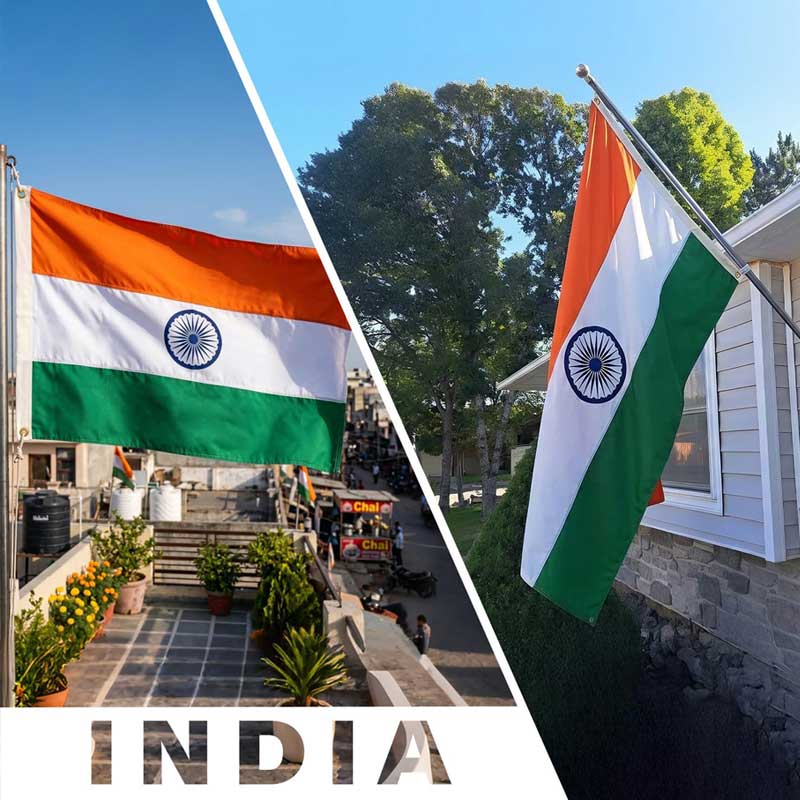
The National Portal of India describes the flag as three horizontal bands, with a navy-blue wheel centered in the white band. It gives a width-to-length ratio of two to three and identifies 24 spokes in the wheel. Use that primary reference to check the India flag artwork before discussing the production process. Save the reference with the school's approval package so the buyer and supplier review the same design.
Keep the design reference separate from a product advertisement. A photograph may show a flag folded, viewed obliquely or moving in the wind, which makes it a poor measuring template. Request a flat front-view proof with the top and hoist clearly identified. If the buyer needs a different historical or project-specific reproduction, resolve that requirement explicitly rather than treating any image labeled India flag as interchangeable.
Resolve the difference between proportions and commercial sizes
An India flag with a finished height of 1.2 meters and a length of 1.8 meters preserves the two-to-three relationship. A rectangle described as three feet by five feet has a different relationship. This arithmetic matters when a commercial product page offers several familiar size names. Ask whether the ordered dimensions reproduce the intended design proportions, and obtain a drawing instead of assuming that a size label answers the question.
Write height and length with units on every quote and proof. If converted dimensions are supplied, identify the primary units used for acceptance. Do not silently stretch the artwork to fill a different rectangle. The school should approve a coherent India flag specification in which the finished outline and the design agree. The example dimensions above illustrate the ratio calculation; they are not a claim about stock availability or a minimum order quantity.
Choose formats according to the actual campus installation
A classroom display, an entrance pole and a temporary assembly can require different constructions. Create an India flag variant for each distinct combination of size and attachment. Record the existing support and ask facilities staff to check fit. A small indoor pole may need a sleeve, while another installation may use a header and clips. The product's national identity does not determine the attachment method.
Avoid carrying a pole-flag specification into another format without review. A wall display may need a different orientation drawing, and a product used aboard a vessel would require a separate brief. For each campus India flag location, identify the person responsible for installation and care. This lets purchasing staff confirm the required quantity of each construction instead of ordering one undifferentiated total and asking the school to adapt the goods later.
Inspect the wheel at the smallest ordered size
The central wheel is the most detail-sensitive part of many India flag samples. Examine it at the actual finished scale, checking its position, outline and individual spokes against the approved master. Ask for a close view of the sample as well as an overall photograph. A large digital preview can conceal how fine details merge when the design is reduced or reproduced on textured fabric.
If the supplier recommends embroidery, printing or a combined construction, request a trial of the wheel on the proposed background. Keep the design geometry distinct from the production method. The supplier should report any reproduction limitation rather than invent a simplified wheel. The school's India flag approver should decide how to resolve a problem using an appropriate design reference and a confirmed production option. A technically neat emblem is insufficient if it depicts the wrong detail.
Compare stripe colors and alignment on the physical sample
Review the India flag sample flat, under consistent lighting, with the selected reference available. Check the sequence and alignment of the color fields separately from their apparent shade. Examine whether seams or printing have made one field visibly uneven. If the construction uses separate fabric pieces, ask how the supplier controls the finished layout after sewing rather than measuring only the cut panels.
Use a physical color reference when consistent appearance matters across multiple displays. A screen preview cannot fully represent thread, fabric texture or translucency. Retain the accepted India flag sample protected from dirt and prolonged light exposure. For later orders, identify whether the supplier should match that sample or a newly issued reference. Do not convert a visual comparison into a claim of measured colorfastness unless relevant test evidence has been obtained.
Approve both faces and the hoist orientation
Mark the top, hoist and intended viewing sides on the India flag construction drawing. Inspect the sample as it will be fitted, not only as it lies on a table. A header attached to the wrong edge or an incorrectly rotated layout can survive an overall image review. Ask the buyer to approve any display-specific orientation using the relevant reference and the requirements of the responsible institution.
Confirm how the reverse will appear. A graphic showing through one layer differs from a separately constructed reverse face. Ask the supplier to state the proposed process and show both sides of the India flag sample. Check whether important features remain recognizable under the intended lighting. If the buyer requires a particular two-face result, record it as a checkable specification rather than relying on the phrase double sided.
Sample the material and construction as one product
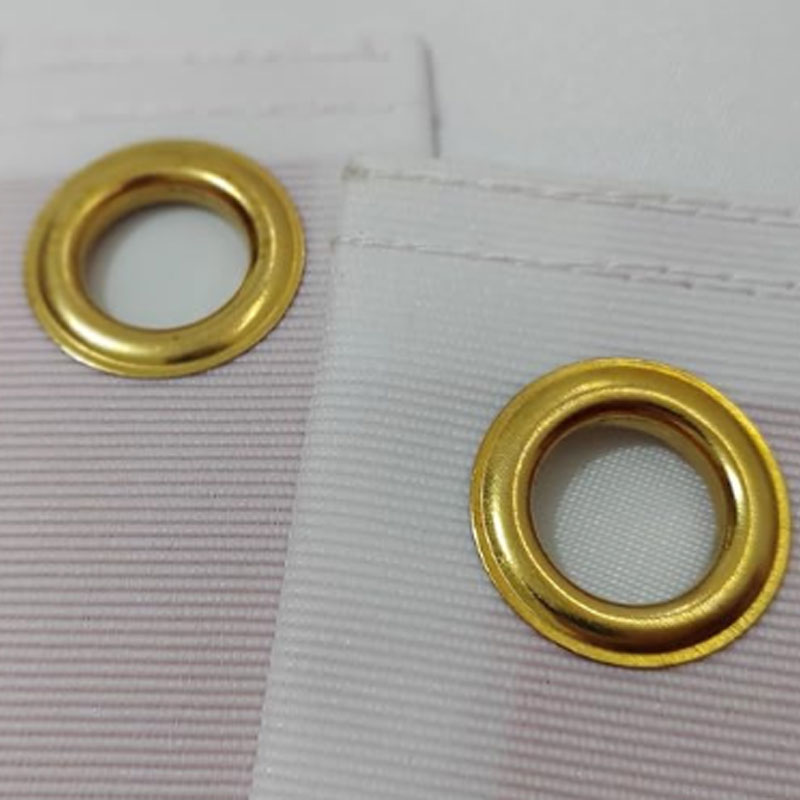
A fabric name does not describe the whole India flag construction. Ask for the proposed material reference, print or embroidery method, seams, header and attachments. Compare a finished sample using those elements together. A loose swatch can help assess texture, but it cannot show whether the decorated area puckers or whether the header pulls the body out of shape.
Check any supplier claims against the evidence actually available. An outdoor description does not establish a fixed lifespan, verified wind limit or universal resistance to moisture. Describe the campus site to the supplier and have the installer assess the complete support arrangement. Keep the accepted India flag construction in the order record. Where a measured performance requirement applies, agree on a relevant method and acceptance criterion before production.
Use an acceptance sheet that distinguishes different errors
Inspect the India flag sample in separate categories: design identity, dimensions, wheel detail, color fields, orientation, seams, attachments and packing. Record each result with a photograph or measurement where useful. An incorrect ratio and a loose thread are different problems and should not be combined into a vague comment that the sample needs improvement. Clear findings give the supplier a specific correction task.
List the file or sample revision that must be resubmitted and identify the school's authorized approver. Keep unresolved points open until the revised India flag sample has been checked. Once accepted, retain the sample with the released construction drawing. Receiving staff can then assess selected units from the delivered batch against the same basis, rather than trying to reconstruct the original agreement from several email messages.
Keep the school assortment traceable after delivery
Label each India flag variant with the design reference, finished size and attachment needed to identify it. Align these identifiers with the packing list and campus allocation. A carton containing several sizes should have a clear content list. Receiving staff should reconcile quantities and note any damage or incorrect variants before the goods are distributed to classrooms or facilities teams.
Store the approved artwork and technical record where the next buyer can find them. If a support changes, review fitting before replenishment. If the school needs new instructions for display or handling, obtain them from the responsible organization rather than treating a manufacturing guide as a substitute. An India flag repeat order is easier to control when the design, construction and actual campus use remain connected in one purchasing record.
| Question | Weak approval basis | Useful approval basis |
|---|---|---|
| Proportions | Commercial size name | Finished height and length checked against the chosen reference |
| Wheel | Large screen preview | Actual-size detail sample and approved master |
| Color fields | Uncontrolled photograph | Physical sample viewed consistently |
| Reverse | Front photograph only | Both faces and construction description |
| Fitting | Generic pole description | Sample on the intended campus support |
For the relevant reference, see National Portal of India: Indian Tricolor. Use it for its stated subject; it is not a certification of the quoted product.
Review india flag product and service information and Kaiqun customization and wholesale services when preparing the specification.
Request a quotation
Ask Kaiqun for an India flag quotation with your approved design reference, dimensions, campus variants and attachment details. Include the required arrival date and the sample points that need confirmation, then use the inquiry form below to start the specification review.
Frequently asked questions
What proportions should an India flag buyer check?
The National Portal of India gives width to length as two to three. State the finished dimensions with units and compare the production drawing with the selected reference before approval.
Why does the India flag wheel need a detail check?
Its small features can become unclear at reduced size or on a different material. Review an actual-size trial using the approved artwork and proposed production method.
Can the same India flag specification cover every campus location?
Only where the design, dimensions, attachment and use requirements match. Keep separate variants for different supports or formats and confirm fit with facilities staff.
Does a nylon or polyester label establish official conformity?
The fiber name does not prove design accuracy, a specific procurement requirement or finished-product performance. Confirm the complete specification and the evidence relevant to the order.
What should be kept for an India flag repeat order?
Retain the accepted sample, artwork revision, material reference, construction drawing and variant table. Review changes before production rather than relying only on the old invoice title.