
Sommario
For a temporary event, an artwork error often becomes visible at the least convenient moment: when the crew has limited venue access and the public opening cannot move. A custom flag that looked correct in a presentation may have a logo hidden by a sleeve, an unreadable reverse or the wrong campaign revision. The useful approval package is one that connects the graphic to the stand, stage or entrance where it will actually be installed.
This guide is for event organizers coordinating a designer, a client and an installation team. It explains how to release a custom flag layout with enough evidence for production and enough clarity for the crew. It does not assume that every venue permits the same mounting arrangement or that a supplier can recover any late change. Confirm the applicable requirements through the responsible venue and supplier contacts.
Begin with the event zone and viewing route
Identify where the display is intended to stand before deciding the graphic scale. An entrance marker, stage backdrop accessory and reception display have different viewing positions and surroundings. Record the route people take and whether they see one face or both. The custom flag brief should show its event zone and the proposed support, not only a logo centered on an empty rectangle.
Ask the installation team for a marked location drawing or photographs with relevant measurements. Note neighboring signs, lights and other visual elements that could cover or compete with the graphic. A custom flag can be technically reproduced correctly and still fail as a display if its important message sits behind a counter or faces the wrong approach. Resolve the layout against the actual setting.
Create a single approval route for the combined artwork
Event artwork can include an organizer identity, client logo, sponsor marks and a dated message. Identify who can approve each element and who consolidates the final decision. The manufacturer should receive one released custom flag layout rather than separate edits from several stakeholders. Keep rights and brand approval with the relevant owner; a production team should not decide whether a sponsor mark may be altered.
Give the complete layout a revision identifier and keep a short change log. A logo replacement can affect spacing and scale beyond the object being changed. If an earlier proof is superseded, state that clearly and archive it outside the released package. The custom flag order line should identify the accepted revision, especially when several event zones use similar but different layouts.
Turn the graphic into a finished-field drawing
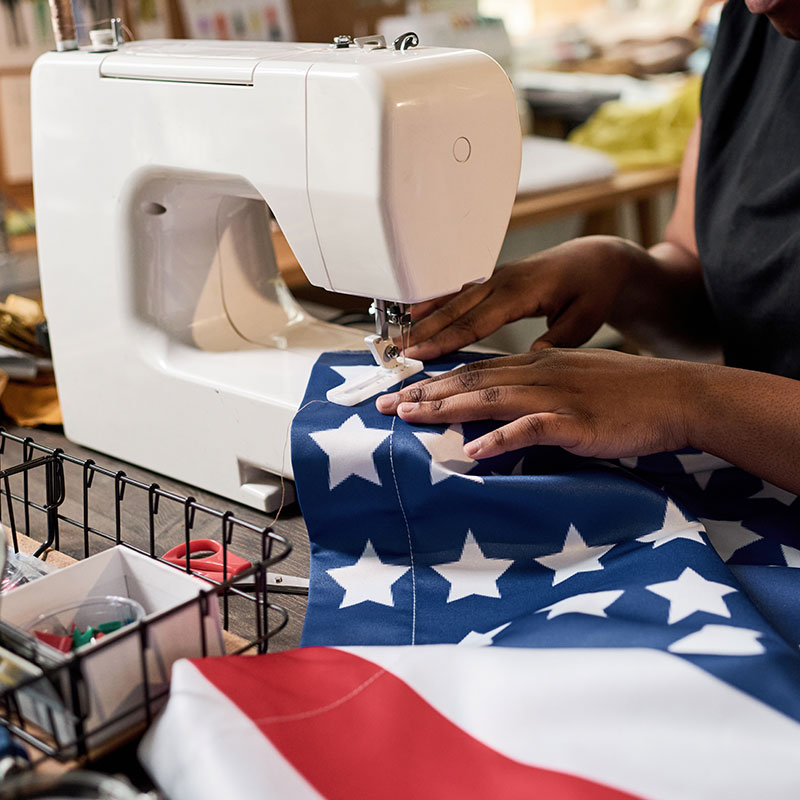
A design file describes visual content; a construction drawing explains how the textile is finished and attached. Put sleeve depth, header, hems and reinforcement on the drawing and mark the visible field. If a border or sponsor line is near an edge, check whether finishing conceals it. A custom flag proof without an attachment reference cannot establish how the installed result will look.
State dimensions with units and distinguish overall finished size from the area intended to be visible. Ask the supplier to confirm a relevant tolerance and the measurement method. If the venue fitting requires a change, return to the layout review before release. Cropping or stretching the custom flag to solve a construction problem is an artwork decision that needs explicit approval.
Test the message at the event's viewing distance
Print a layout at the proposed scale or create a documented physical mockup, then examine it from the positions where recognition matters. A desktop screen lets reviewers zoom in; event visitors may be moving and unable to inspect fine text. Identify the one message or identity element that the custom flag must communicate and ensure it remains recognizable in the actual setting.
If details are too small, discuss a larger graphic, a different size or an authorized simplified event layout. Do not ask the factory to remove a slogan or sponsor mark without the owner's decision. For a custom flag with a demanding emblem, request a trial on the proposed material and process. A paper mockup helps assess scale but does not approve textile detail or color appearance.
Review front, reverse and lighting together
A passage display can be approached from opposite sides, while a piece against a stage wall may have one intended viewing face. Specify whether a mirrored reverse is acceptable or whether both faces must be separately readable. Ask for the actual construction proposed to achieve that result. The custom flag proof should identify top and attachment edge in each view.
Examine a representative assembly under relevant lighting, particularly near bright windows or event lights. Show-through can be difficult to judge against a dark studio background. If a blocking layer or second panel is proposed, review its effect on the finished item rather than approving only the front graphic. Record the accepted custom flag face arrangement and keep it connected to the quote.
Make the sample useful to the installation crew
Have the crew fit a representative sample to the intended or a matching support. Check access, orientation and whether the visible graphic matches the approved layout. Record which location and equipment the trial represents. A custom flag sample accepted for color is not automatically an approval of fitting, and a trial at one zone may not represent another support arrangement.
Keep the support assessment with the responsible installer and follow the applicable venue and equipment guidance. The factory's textile confirmation does not establish every installation condition. If a requirement remains unresolved, name its owner and next action. This is more useful than issuing a general custom flag approval that leaves the crew to discover the missing decision during venue access.
Link artwork release to the production schedule
Work backward from the required receiving and installation milestones. Separate artwork release, sample work, buyer review, production, packing and dispatch. Ask the supplier to confirm the dependencies for the actual quantity and construction. A request marked urgent is not a confirmed custom flag delivery plan, and changing the artwork after release may change both work and timing.
Decide how late revisions will be handled. A confirmed option might involve a revised arrival, fewer first-release variants or another supplier-agreed arrangement. Keep any product or cost change explicit. Do not assume that faster transport can recover every manufacturing delay. The custom flag schedule should show which revision is released and which variants remain on hold.
Pack the approved variants for a timed handover
Give each event-zone variant an item code and connect it to the packing list. Decide whether packs are grouped by zone, support or installation sequence. Include the relevant accessory count and a simple setup reference. The custom flag artwork file should not be the only way a crew member can identify top, front or the correct attachment at a busy venue.
Before dispatch, compare the packing plan with the installation drawing. After the event, count and inspect returned pieces before marking them ready for reuse. Keep dated or obsolete graphics distinct from current stock. The next custom flag inquiry can then use the accepted construction and actual replacement need while revisiting any changed artwork, venue or fitting.
| Approval artifact | Question it answers | Question still separate |
|---|---|---|
| Zone drawing | Where the display will be seen | Who owns the graphic rights |
| Finished-field proof | What remains visible after finishing | Support suitability |
| Material trial | How this process reproduces the artwork | Every other size and face arrangement |
| Packing and setup reference | Which kit goes to each location | Whether a late design change is feasible |
Per il relativo riferimento, cfr Guida GINETEX sulle informazioni sulla cura per articoli tessili completi. Utilizzarlo per l'oggetto dichiarato; non è una certificazione del prodotto citato.
Revisione informazioni personalizzate sul prodotto e sul servizio della bandiera e Personalizzazione e servizi all'ingrosso Kaiqun quando si prepara la specifica.
Richiedi un preventivo
Send Kaiqun your custom flag layouts, event-zone drawing, quantities, finished dimensions and support details. Include the destination, required receiving date and the contact who will release the consolidated artwork. Request confirmation of construction, sample coverage, labeled packing and schedule before approving the custom flag production package.
Domande frequenti
What comes first in a custom flag event brief?
Identify the event zone, viewing route, support and approval owner. Those requirements give the custom flag layout a real setting before the buyer selects graphic scale or finishing.
Can a paper proof approve the custom flag?
It can help check layout and scale, but it does not establish the textile result. Use a relevant custom flag material or finished sample for color, detail, reverse and fitting questions.
Who should approve a custom flag sponsor change?
The responsible rights or brand owner should approve the revised layout. Consolidate that decision into one custom flag revision before it reaches production.
How should late artwork changes be managed?
Ask the supplier to confirm the effect on work and delivery. Record the revised custom flag scope, specification and release date instead of assuming the original schedule still applies.
How can the crew identify the right event kit?
Use zone and item codes linked to the packing list and a setup reference. The custom flag package should make orientation and accessories clear without requiring the crew to interpret the production file.