
Sommario
For retail chains, custom flag purchasing needs a decision about the approved graphic revision, supported by a front-and-reverse proof. This guide connects that decision with the actual graphic, the operating team and the order record. It is intended to help a buyer resolve the smallest important design feature before releasing production rather than rely on a general product description.
The planning setting is a store network with a shared campaign identity and different local fixtures. This is an illustrative purchasing context, not a report of a completed customer project. Confirm the actual material, process, dimensions and delivery with Kaiqun. Use a buyer-approved master for design accuracy; catalog imagery is an illustration rather than an authoritative construction reference.
Identify the selected graphic and its critical features
This order uses a customer-selected identity master and the construction confirmed for the project.
Keep the complete approved layout distinct from its manufacturing drawing.
Define the custom flag order boundary
The customer master establishes the graphic, while the custom flag supplier confirms the proposed fabric and assembly. For artwork release, keep those two references connected. The retail campaign artwork owner should resolve the design decisions; store managers and the distribution team should confirm the operating information that affects the item. Do not ask either party to guess the other's requirements.
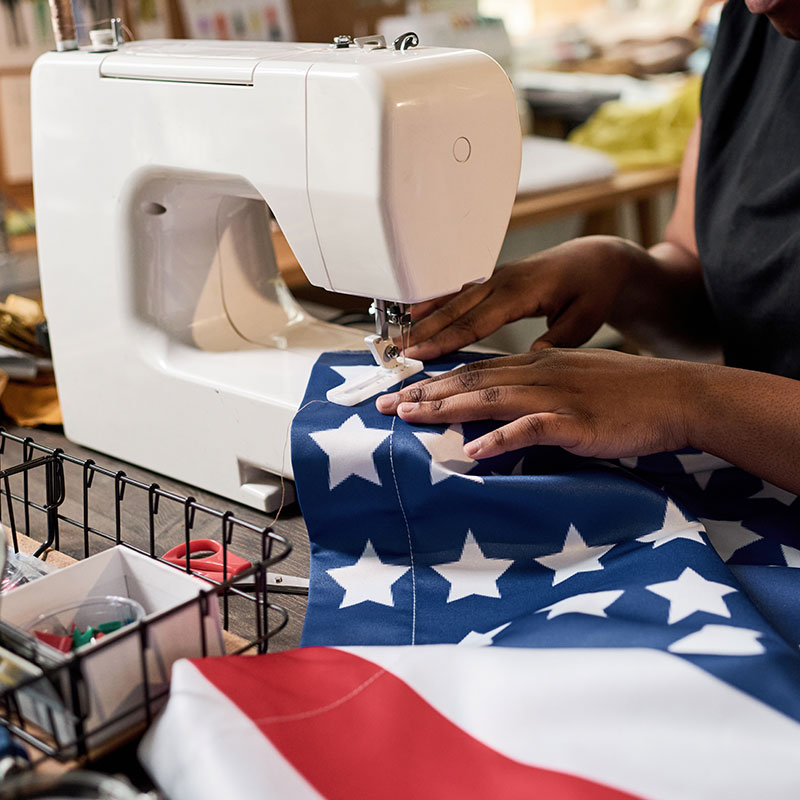
Ispezionare la caratteristica più piccola su scala finita
Un disegno può apparire nitido quando ingrandito su un monitor e perdere la sua identità quando ridotto alla dimensione del tessuto proposto Esaminare i contorni sottili, gli spazi chiusi, le scritte e i simboli ripetuti separatamente Richiedi una prova di dettaglio sul materiale previsto per le caratteristiche che sono importanti per il riconoscimento Una stampa cartacea è utile per la revisione del layout ma non mostra come si comportano inchiostro o punti sul tessuto selezionato.
For custom flag, define which features must remain distinct and which variations are acceptable. If a detail fails, the options are a larger graphic, a different process or an authorized simplified master. The production team should return the issue for a decision. It should not remove words or redraw a symbol simply to make an unapproved file easier to manufacture.
Review color under a documented viewing condition
Describe color with an agreed physical reference where appearance matters. Phone photographs and screen previews depend on lighting, camera settings and displays. Ask for a fabric sample with the proposed printing or sewing process, then compare it with the reference under the same lighting. Mark the face, material and sample revision so the retained piece remains useful for later orders.
Do not promise a universal numeric color tolerance without identifying the measurement method and agreeing it with the supplier. A custom flag buyer can instead record the visual acceptance decision and request instrument data when the project needs it. Dark fabric, backing layers and transmitted light may change the perceived result, so examine the actual finished assembly rather than an isolated ink swatch.
Control changes after the sample is accepted
An accepted sample becomes useful only when the factory and buyer can identify the file and construction behind it. Attach the custom flag sample reference to the order, including material, finished dimensions, process and hardware. A later request for a different size may require a new layout review, particularly where small details, borders or fitting allowances are involved.
For replenishment of custom flag, ask the supplier to confirm that the master remains available and suitable for the new requirement. Do not treat an old email attachment as permanent approval for every future edition. Record the replacement file when an organization updates its identity or the customer changes the required flag version.
Separate central approval from store confirmation
Marketing can release one campaign master while stores confirm local support measurements and quantities. Give each decision a defined field and deadline. This prevents a centralized purchase from assuming that every branch uses the same bracket, display orientation or storage arrangement.

Use stable variant and location codes
Store names and abbreviated design titles can be ambiguous. Connect an item code to each design, size and fitting combination, then allocate it to store codes. The same identifiers should appear in the quotation, packing list and receiving record so a distribution problem can be localized.
Review the campaign changeover
Decide when old graphics are removed and where they go. Keep current, future and obsolete stock distinguishable. A physically reusable piece with an expired message should not be treated as ready stock simply because it remains clean and undamaged.
Collect feedback in a comparable form
Ask branches to report fitting, graphic or packing issues using the variant code and photographs. Separate site-specific support problems from repeated product issues. Central purchasing can then request a targeted correction rather than changing every store’s specification based on one unclear complaint.
Make the specification usable by the operating team
Use a branch allocation register before the supplier starts packing. Marketing can approve the campaign master, but stores need to confirm quantities and the fixtures they actually use. Connect each design-size-fitting variant with a stable store code. The same identifiers should appear on the custom flag order, sample reference and carton list. A large total quantity is not enough information to distribute a mixed campaign accurately.
A worked artwork release decision
Central marketing releases a campaign layout while branches use two orientations of the fixture. A flat artwork approval for one orientation should not silently become permission to rotate or crop the other. Obtain the relevant location requirements and issue variant proofs that preserve the accepted graphic and visible area.
Connect each custom flag layout revision with store and item codes in the distribution file. A branch can confirm its fixture without changing brand content; marketing can release content without assuming common fittings. Check the allocation against those decisions before packing so an artwork difference does not become a large sorting task across the store network.
Utilizzare un foglio di lavoro di rilascio anziché un'approvazione generale
Create a custom flag line for each distinct design, size, face arrangement and attachment. On that line, identify the reference for the approved graphic revision and the evidence still required for the smallest important design feature. Use the graphic-specific review above to define the relevant observation: Keep the complete approved layout distinct from its manufacturing drawing. Keep an unresolved point visible with its owner and next action instead of turning a partial sample review into an unconditional release.
The operational handover should include a store allocation table connected to variant and carton codes. Ask store managers and the distribution team to confirm the part of the record they will actually use. The decision rule for this custom flag purchase is that artwork is released only after the design owner resolves the detail. Record accepted characteristics separately from outstanding questions. A later change to material, process or fitting should identify which part of this evidence must be reviewed again.
| Decisione | Prove per questo progetto | Confine di rilascio |
|---|---|---|
| Grafico | This order uses a customer-selected identity master and the construction confirmed for the project. | Keep the complete approved layout distinct from its manufacturing drawing. |
| Approvazione dell'opera d'arte | una prova frontale e inversa | artwork viene rilasciato solo dopo che il proprietario del design risolve il dettaglio |
| Record operativo | a store allocation table connected to variant and carton codes | central artwork approval does not establish a common attachment at every store |
| Identità dell'ordine | custom flag: design, size, face and fitting variant | Costruzione confermata dal fornitore e riferimento approvato dall'acquirente |
Per il relativo riferimento, cfr Guida GINETEX sulle informazioni sulla cura per articoli tessili completi. Utilizzarlo per l'oggetto dichiarato; non è una certificazione del prodotto citato.
Revisione informazioni personalizzate sul prodotto e sul servizio della bandiera e Personalizzazione e servizi all'ingrosso Kaiqun quando si prepara la specifica.
Richiedi un preventivo
Ask Kaiqun to quote custom flag against the complete master and released variant register. Include the approved graphic revision, quantities, finished dimensions, fitting details, destination and receiving milestone. Explain the open questions about the smallest important design feature and request a sample plan with clear coverage. Confirm the proposed material, process, packing and schedule before releasing the custom flag order.
Domande frequenti
What should I resolve first for custom flag?
For custom flag, identify the approved graphic revision and the selected design master. Keep its review separate from the operating confirmation provided by store managers and the distribution team.
What evidence should a custom flag sample provide?
A custom flag sample should demonstrate a front-and-reverse proof. Use the product-specific checks in this guide and record which sizes or constructions the trial actually represents.
Can one custom flag approval cover all locations?
A custom flag approval can cover only confirmed common requirements. Compare the actual supports, dimensions and use, and repeat checks introduced by another variant.
How should a changed custom flag specification be handled?
Treat the affected custom flag requirement as a revision and ask what evidence must be renewed. Keep the supplier proposal and the buyer decision connected before release.
What helps obtain a precise custom flag quotation?
Send the custom flag master, variant quantities, dimensions, fitting and destination. Include the smallest important design feature, the required receiving date and the person responsible for the remaining approval.