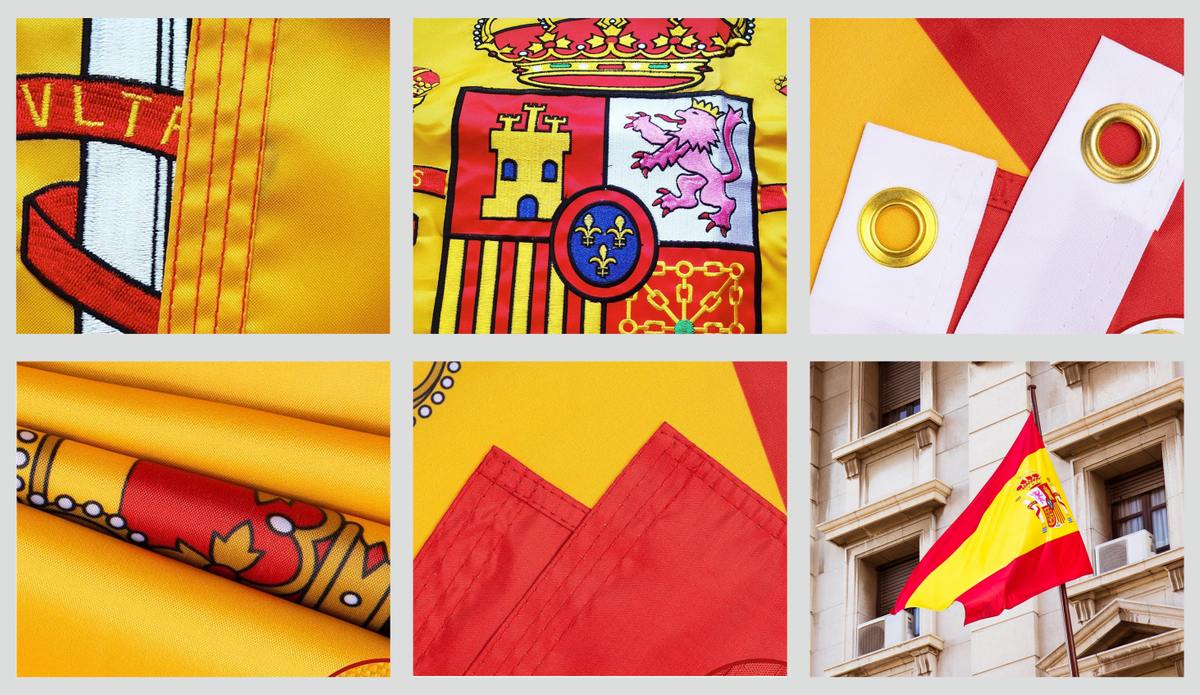
A 4.5 cm wide canvas heading is double-stitched to the left side of the flag.
The canvas heading features two brass grommets.
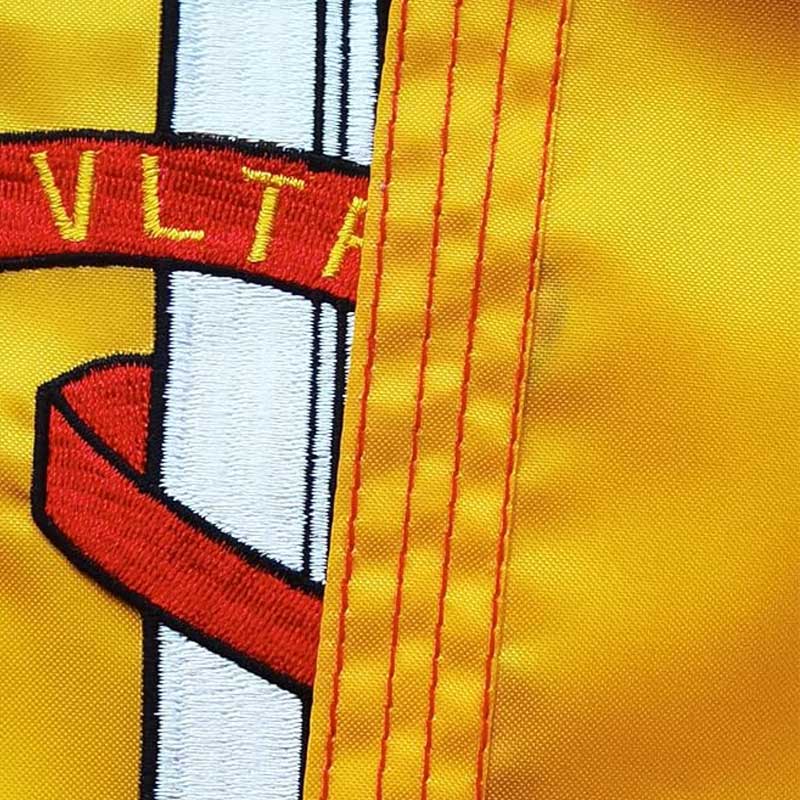
Double stitching is applied to the top and bottom edges of the flag.
There are four rows of stitching on the fly end.
Reinforced back-stitching is applied at the fly corners.
This Spanish flag is UV-resistant and water-resistant.
The Spanish flag is available in both printed and sewn versions.
| National Flag Size Options | |
| National Flag 12″ × 18″ | National Flag 5″ × 8″ |
| National Flag 2″ × 3″ | National Flag 6″ × 10″ |
| National Flag 2.5″ × 4″ | National Flag 8″ × 12″ |
| National Flag 3″ × 5″ | National Flag 10″ × 15″ |
| National Flag 4″ × 6″ | National Flag 12″ × 18″ |
| Available Fabrics | 210D polyester, 420D polyester, 600D polyester, spun polyester, cotton, poly-cotton blend, nylon, and other fabrics upon request. |
| Available Brass Grommets | Brass grommets; brass grommets with hooks |
| Available Techniques | Embroidery, appliqué, and printing |
| Available Reinforcements | Extra fabric, additional stitching, and other accessories upon request |
| Available Sewing Threads | Cotton thread, polyester thread, and other threads upon request |

【Premium Material】Our 3″x5″ ft Spanish flag is crafted from heavy-duty 210D nylon fabric, designed to withstand various weather conditions (rain, snow, and sun). These selected, durable materials are water-resistant, fade-resistant, UV-resistant, and quick-drying, ensuring a long service life.
【Exquisite Craftsmanship】Features a heavy-duty canvas header and genuine brass, rust-proof grommets for superior durability. The header and fly end are reinforced with quadruple stitching to prevent fraying and tearing.
【Stunning Appearance】Meticulously sewn stripes and vibrant, traditional colors create an eye-catching design that evokes a deep sense of pride in Spain.
【A Must-Have Flag】This Spanish flag serves as an ideal symbol and a wonderful gift for friends and family. Display it on a flagpole to show your pride and affection, or hang it on a wall to celebrate National Day in homes, offices, along streets, or at outdoor events.
【100% Guaranteed】We stand behind our products and strive to strictly control the details of every production step to ensure consistent quality. Every Spanish flag we produce—whether embroidered or printed, and suitable for poles, cars, boats, or gardens—undergoes individual inspection before shipment to ensure your satisfaction.
I. Basic Introduction to the National Flag
The Spanish national flag is called Bandera de España in Spanish and is also known as the Rojigualda, meaning “the red-and-yellow flag.” Its red-yellow-red color scheme originated as a naval ensign during the reign of King Charles III in 1785. The current version bearing the national coat of arms was officially established in 1981, while the flag itself is recognized under Article 4 of the Spanish Constitution of 1978.
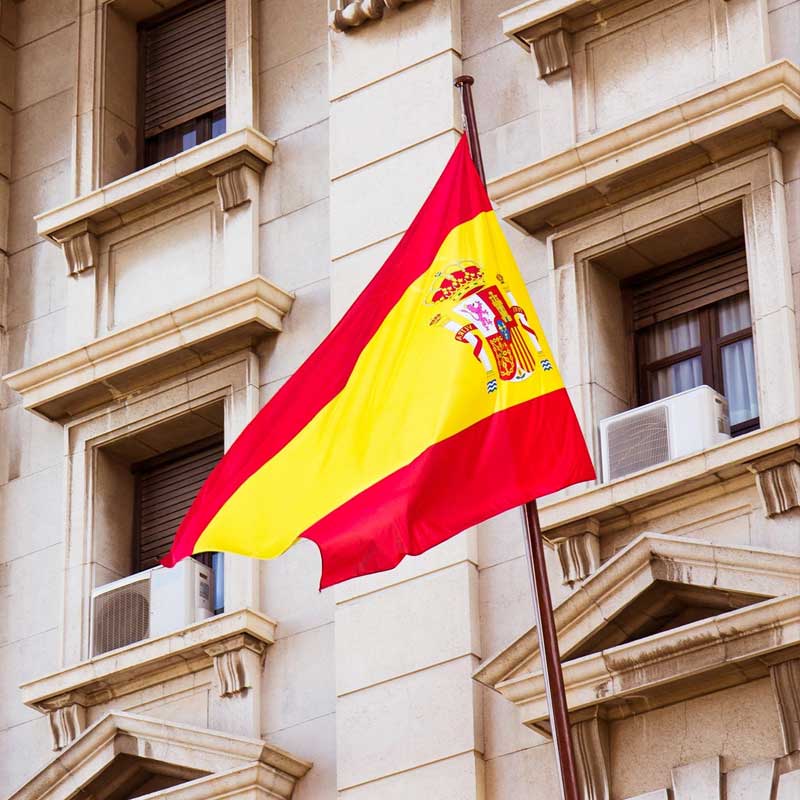
Design and Proportions: The rectangular flag has an official width-to-length ratio of 2:3. It consists of three horizontal stripes arranged red, yellow, and red. The upper and lower red stripes are equal in height, while the central yellow stripe is twice as wide, giving the stripes a ratio of 1:2:1. The national coat of arms is positioned on the yellow stripe toward the hoist and must not exceed two-fifths of the flag’s total height.
Symbolism of the Colors and Coat of Arms
Red: Originates from the heraldry of the Kingdom of Castile and symbolizes courage, sacrifice, and patriotic devotion.
Yellow: Originates from the heraldry of the Kingdom of Aragon and represents prosperity, sunshine, and national wealth and glory. The red-and-yellow color scheme was originally selected to make Spanish vessels easier to identify at sea.
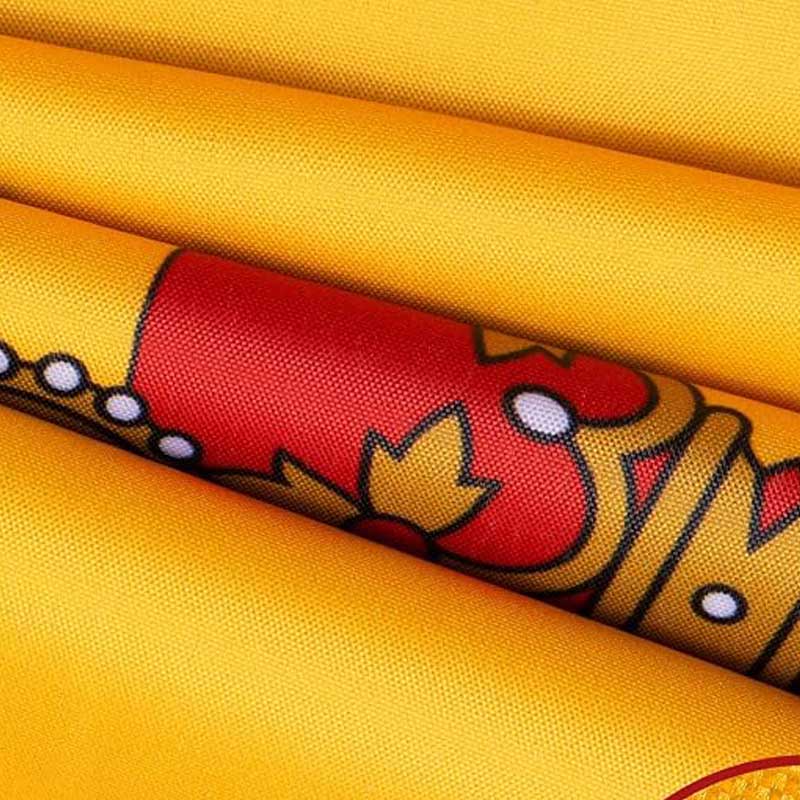
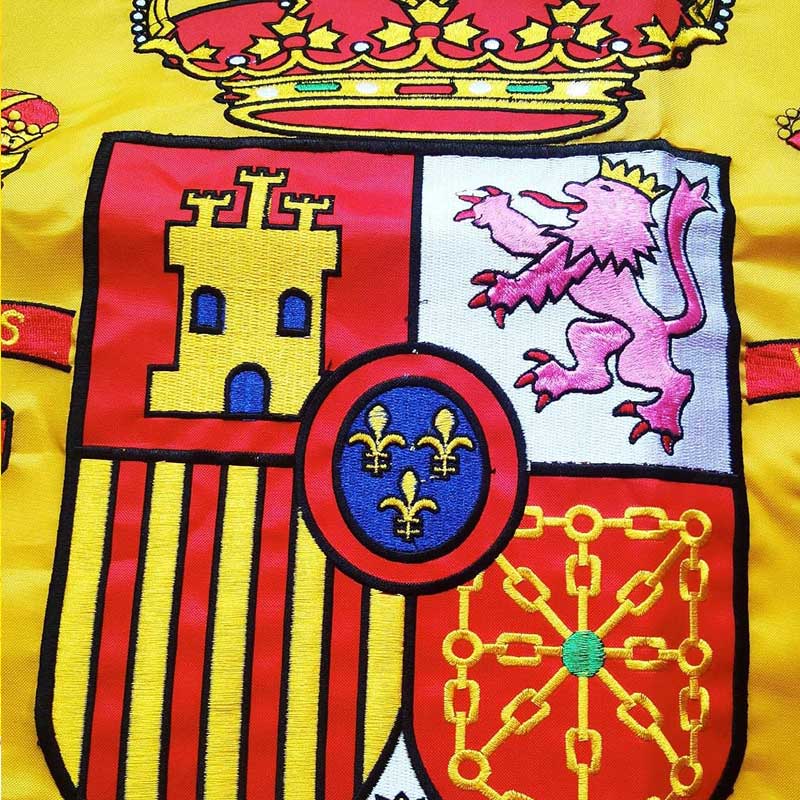
Coat of Arms: The coat of arms combines the heraldic symbols of Spain’s historic kingdoms. The Pillars of Hercules represent the Strait of Gibraltar and bear the motto Plus Ultra, meaning “Further Beyond.” The crown represents Spain’s constitutional monarchy, while the pomegranate at the bottom symbolizes Granada.
Main Flag Variants
State Flag: The red-yellow-red horizontal flag bearing the complete national coat of arms. It is officially used by government institutions, diplomatic missions, and the armed forces.
Civil Flag: A plain red-yellow-red tricolor without the national coat of arms. It may be used by private citizens and merchant vessels.
Royal Standard: A special flag reserved for the King of Spain. It is distinct from the national flag and is displayed at royal residences and during official royal travel.
Naval Ensign and Military Flags: Special flags reserved for Spanish naval vessels and military units. Private use is prohibited.
II. Main Uses
1. Mandatory Display by Official Institutions
The State Flag bearing the national coat of arms is displayed at royal residences, Parliament, government buildings, courts, local administrative offices, public schools, embassies, and consulates. It must be flown at public buildings on working days and statutory holidays.
It is used as a symbol of national sovereignty on National Day, Constitution Day, and other commemorative occasions, as well as during state visits, official ceremonies, and elections.
2. Civilian Use
Private citizens, companies, and social organizations may display the Civil Flag without the national coat of arms. It is widely flown during major national holidays and sporting events, while small tabletop flags may be used at weddings and other celebrations.
Merchant ships and privately owned vessels may use the Civil Flag without the national coat of arms as an indication of Spanish nationality.
Private households may fly the flag at half-mast following the death of a family member.
3. Military Use
Military flags are displayed at army barracks and military bases, while Spanish naval vessels use the appropriate Naval Ensign. Military flags are also used during parades, exercises, and commemorative ceremonies. The standard national flag is not the same as a military flag.
4. Royal Standard
The Royal Standard is displayed at the King’s official residence and on vehicles and vessels used by the Royal Family. It represents the Spanish monarch.
5. Ceremonial and International Use
Following a major national disaster or the death of an important public figure, flags may be flown at half-mast nationwide. The correct procedure is to raise the flag fully to the top of the pole before lowering it to a position approximately one-third of the way down. Before taking down the flag, it must first be raised to the top and then fully lowered.
At the Olympic Games, international summits, diplomatic events, sporting competitions, and other international occasions, the Spanish flag is displayed as the national symbol of Spain.